
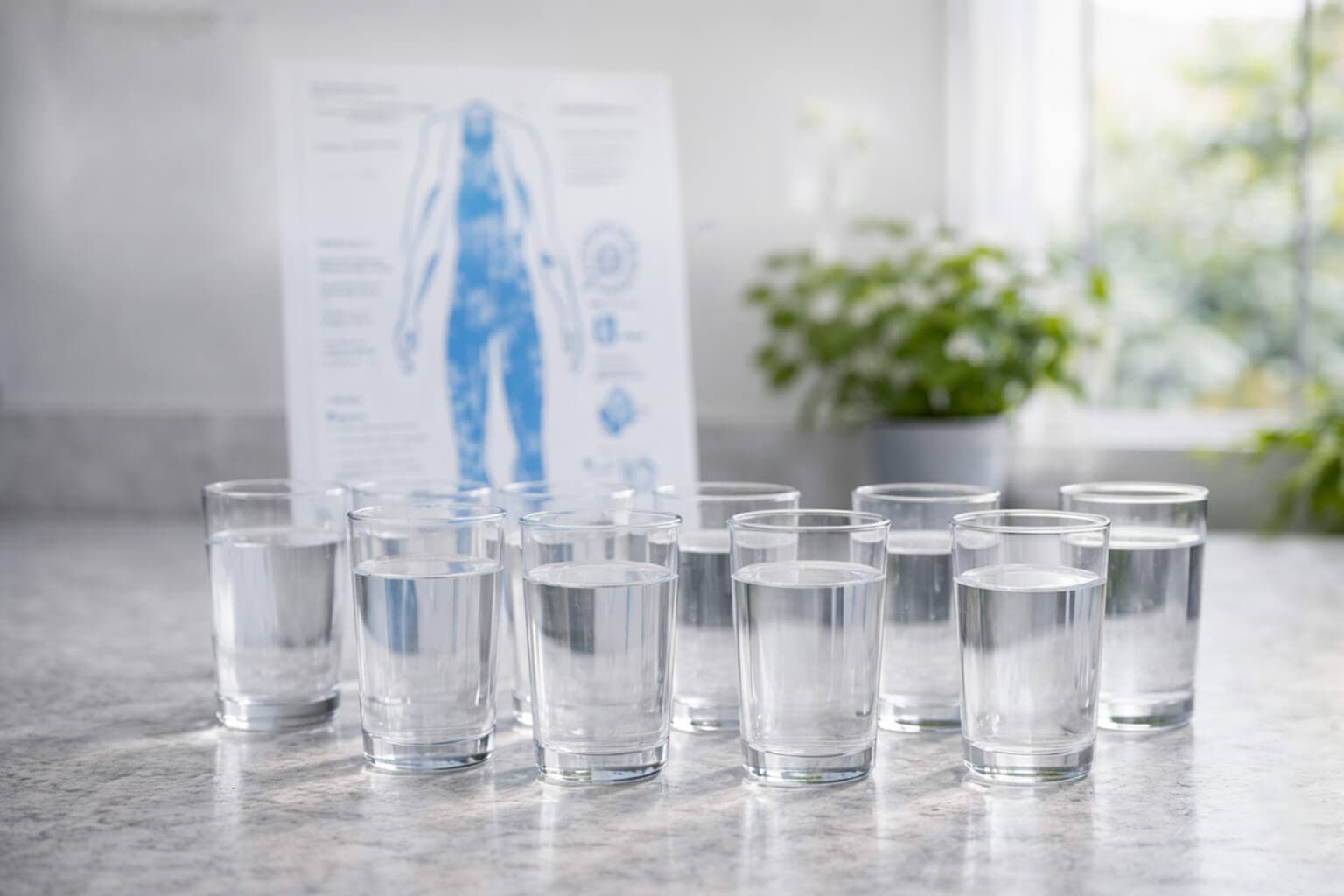
Why the 8-glasses rule became popular
The idea of drinking eight glasses of water a day is simple, memorable, and easy to repeat. That is part of the reason it has stayed so common in health advice. The problem is that easy advice is not always complete advice.
People do not all live in the same environment, eat the same foods, or move through the day in the same way. A person working in an air-conditioned office in Lahore will have different hydration demands than someone commuting in the heat, exercising outdoors, or fasting for long stretches.
What really affects how much water you need
Hydration needs are shaped by multiple factors working together. Climate is one of the biggest. Hot weather increases water loss through sweat, and that matters in Pakistan for a large part of the year.
Your diet also changes your hydration pattern. Foods like fruit, vegetables, soups, yogurt, and tea contribute fluids. At the same time, salt-heavy meals, long hours outdoors, or physically active days can make your body need more water than usual.
- Body size and age
- Temperature and humidity
- Exercise and physical work
- Food choices and salt intake
- Illness, fever, or digestion issues
Why quality matters as much as quantity
Hydration is not only about hitting a number. It is also about what kind of water you drink regularly. If the taste feels off, if the source feels uncertain, or if the supply is inconsistent, people often end up drinking less than they should.
That is why dependable drinking water matters in daily life. Families and office teams tend to build better hydration habits when the water feels clean, tastes consistent, and is easy to access throughout the day.
A more practical hydration approach
Instead of treating eight glasses as a rigid target, think in terms of routine. Drink water regularly across the day. Increase intake when it is hot, when you are active, or when your meals are heavier and saltier.
For families, a visible supply of clean water in the kitchen helps. For offices, keeping dependable drinking water available in shared areas reduces the chances that staff will simply delay drinking until they feel tired or thirsty.
- Start your day with water instead of waiting until late morning
- Drink more during hotter days in Lahore
- Keep water accessible in kitchens, desks, and meeting areas
- Use steady intake across the day instead of large gaps
Do all adults need the same amount of water?
No. Water needs vary depending on climate, food, body size, activity, and health status.
Does tea or food count toward hydration?
Yes. Fluids from beverages and high-water foods contribute to your daily hydration, although clean drinking water should still be a regular part of the day.
Why is hydration especially important in Lahore?
Heat, humidity, commuting, and long working hours can all increase water loss and make regular hydration more important.